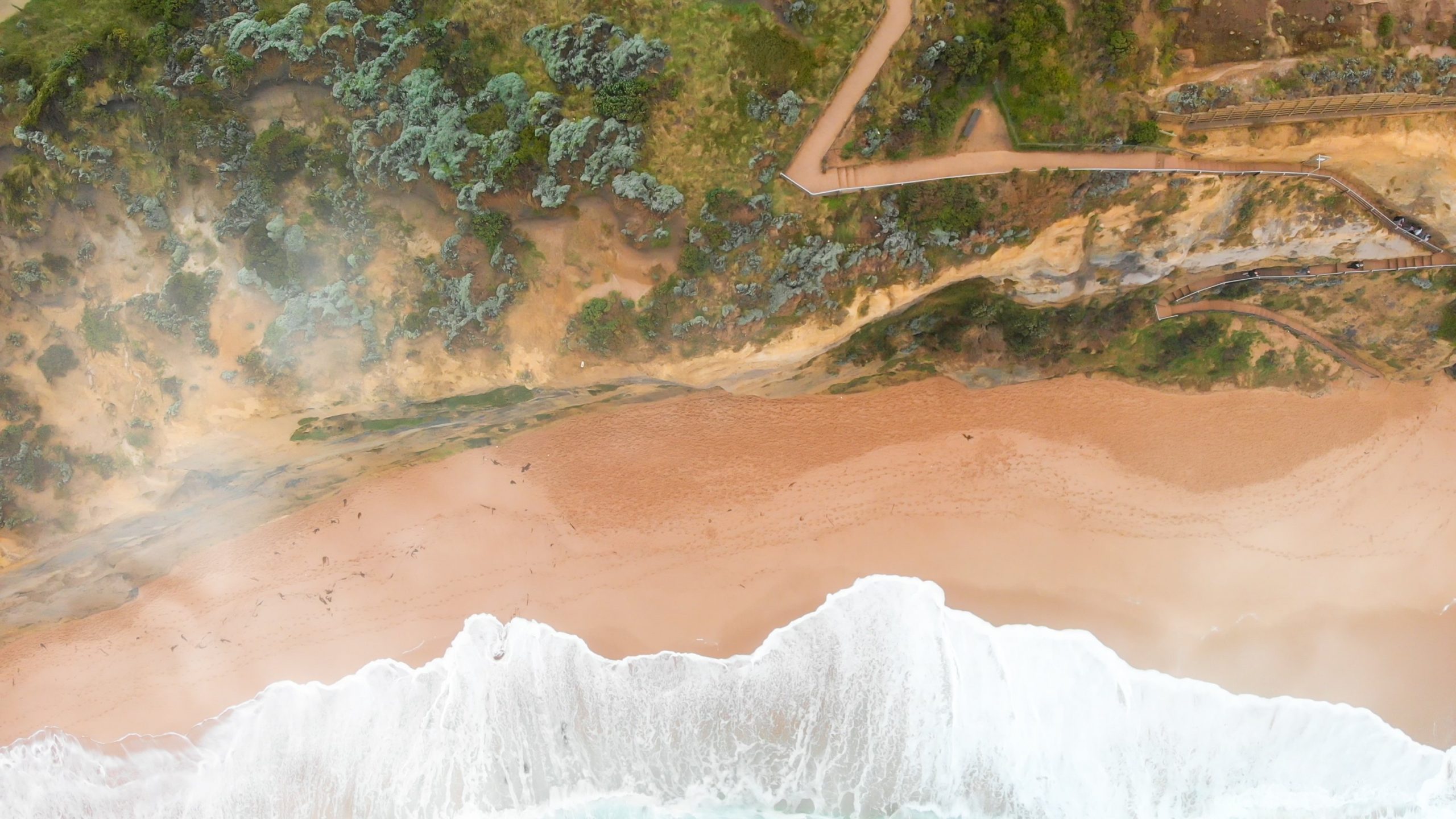
Stand on two beaches just a few miles apart and the contrast can be striking. One may look wide, calm and stable, while the other shows crumbling cliffs, damaged dunes and waves steadily eating away at the land. Coastlines sit where water is always moving and land is often loose, so even small differences can lead to very different results over time.
The main idea is simple. Waves, tides, storms, the type of rock and the amount of sand all shape a coastline. But it’s the local conditions that determine how fast erosion happens. A coast with solid bedrock, strong dunes and a steady supply of sand can stay intact much longer than a low-lying, muddy shore exposed to powerful waves.
Researchers who track shorelines from space have shown just how uneven that change can be. A global satellite study found that some coasts stay fairly stable for decades while others retreat fast, especially where extreme events hit hard. That patchwork is why erosion never follows a single script.
1. Waves Behaving Differently at the Shore
Waves provide the constant energy that drives coastal erosion. Day after day, they pick up sand, crash into rock and carry loosened material back into the sea. Coastlines exposed to strong open-ocean waves experience much more force than those in sheltered areas like bays or inlets protected by headlands.
Some beaches face incoming waves directly for most of the year, making them more vulnerable to erosion. Others receive waves at an angle, which spreads the energy along the shore instead of hitting it head-on. This creates a process called longshore drift, where sand is slowly moved sideways along the coast. Over time, this can strip sand from one area while building it up in another, leading to noticeable changes in beach width and cliff shape.
According to the USGS, waves are the primary energy source behind coastal erosion. That sounds straightforward, yet the way wave power is delivered changes from place to place. Wave height matters. Wave direction matters. The number of storms matters too.
Nearshore features also influence how powerful waves become when they reach the shore. Offshore sandbars, for example, can make waves break earlier, which spreads out their energy and reduces their impact on the coast. In contrast, a steep underwater slope allows waves to keep their strength until they are very close to land. In these areas, the wave impact can feel more sudden and intense, especially during storms or rough weather.
Timing also plays an important role. During calmer seasons, a beach can recover as gentle waves slowly push sand back toward the shore. But if strong waves keep arriving without long breaks, there is less time for that recovery to happen. Over time, the coast loses more material than it gains and the shoreline gradually moves further inland.
2. Rock Type and the Pace of Coastal Change
In muddy, low-lying areas, erosion behaves differently. The soft, loose material is easy for waves and currents to remove, so it can wear away quickly. Because the land is very flat, even a small drop in height can cause the shoreline to move a long distance inland. As a result, these coasts can retreat more noticeably over time, even without extreme storms.
A Nature Communications study on muddy coasts found that these shorelines are often especially dynamic, with both rapid erosion and rapid buildup in different places. In simple terms, the type of ground determines how quickly a coastline can change.
3. Sand Supply Builds or Breaks Beaches
A beach depends on a steady supply of sediment. If enough sand is delivered to replace what waves and currents take away, the shoreline can remain wide and protective. But when that supply decreases, the beach begins to narrow. Once this buffer is reduced, waves more easily reach dunes, coastal bluffs, roads and even seawalls.
One of the main sources of coastal sediment is rivers. They transport sand and silt eroded from mountains and inland plains down to the sea. Coastal cliffs and bluffs can also contribute material as they slowly erode. In some areas, even the erosion of nearby shorelines helps feed adjacent beaches, allowing sediment to be redistributed along the coast.
A beach can sometimes appear stable after a calm season, but its long-term sediment balance may already be in decline. If more material is being removed than replaced, even ordinary wave action can cause noticeable erosion because there is less sand available to absorb wave energy.
The grain size also matters. Coarser, pebbly beaches tend to resist wave erosion better because heavier particles are harder to move. Fine sand is more easily shifted by waves and currents, while mud behaves differently again – settling in calm waters but quickly being re-suspended during storms or strong tidal flow.
Far from active river mouths, sediment supply can become limited over long periods. Some beaches persist on sand delivered thousands of years ago, effectively relying on a slowly diminishing “legacy” supply. If that input weakens, the coast begins to depend on stored sediment and signs of erosion gradually become more evident.
That’s why beach width can sometimes be misleading. What appears to be a stable, permanent shoreline may actually just be a temporary buildup of sand. In reality, the coast is constantly adjusting, balancing sediment gained with sediment lost through waves, currents and storms. When losses outweigh gains over a long period, the system falls into deficit and shoreline retreat becomes increasingly likely.
4. Tides, Currents and Seafloor Shape Matter
Coastal erosion is the gradual wearing away of land along the shoreline by the action of the sea. It happens when waves, currents, tides and sometimes storms remove sand, soil, or rock from the coast and carry it elsewhere. Over time, this can make beaches narrower and cause cliffs or coastal landforms to retreat inland.
Coastal erosion is often explained in terms of waves, but tides and currents strongly influence where that wave energy actually hits the shore. A large tidal range exposes and covers a wider stretch of coastline each day. This constant cycle of wetting and drying can weaken sediments and shift the zone where erosion is most active.
Currents also play a major role by moving loose material along the coast like a conveyor belt. They can remove sand from one beach and deposit it further along the shoreline. In areas such as estuaries and around headlands, these currents interact in complex ways, shaping channels, sandbars and shoals that continually alter how the coast responds to waves.
Below the water surface, the shape of the seafloor has a strong but often hidden influence. A shallow, gently sloping seabed makes waves break earlier and lose energy before reaching land. In contrast, deeper nearshore waters allow waves to stay powerful until they reach the coast. Even small underwater features like ridges or dips can concentrate wave energy into specific areas, creating erosion “hot spots.”
Because of these factors, nearby beaches can behave very differently. One bay may lose sand while the next gains it, simply due to subtle differences in coastline shape, seabed gradient, or the way waves bend as they enter shallow water.
5. Storms Can Change a Coast Overnight
During a storm, wind strengthens and pushes larger, more powerful waves toward the shore. These waves carry more force and break more violently, rapidly eroding sand from beaches and cutting into dunes or soft cliffs. Instead of gently moving sediment back and forth like everyday waves, storm waves tend to remove and relocate large amounts of material in a short time.
At the same time, storm surge raises sea level temporarily. This allows waves to reach farther inland than usual, so areas that are normally safe, like upper beaches, dunes, roads, or seawalls, can suddenly be exposed to direct wave attack. This inland reach is often what causes the most visible damage.
Strong backwash and currents generated during storms also pull sand offshore, where it can form underwater bars. A beach that looked wide and stable before the storm can quickly lose its upper layers, becoming narrow or even scarped.
After a major storm, a coastline often looks dramatically reshaped. Beaches may become narrower and steeper as powerful waves strip sand from the shore and push it offshore. Dunes can be cut back or collapsed and storm surge may carry waves far inland, leaving visible marks of how high the water reached. Sand that once formed a wide, protective beach is often redistributed into underwater bars or moved along the coast.
In the following days and weeks, calmer wave conditions begin to slowly reshape the shoreline. Some of the sand stored offshore may gradually return, helping rebuild parts of the beach. However, recovery is not always complete. If too much sediment was lost or carried away, the coastline may remain in a more eroded state. Over time, repeated storms without enough new sediment can cause the shoreline to shift landward, leading to long-term retreat.
6. Sea Level Rise Pushes Erosion Further Inland
Over time, this pushes the entire shoreline landward. Storms become even more damaging because they build on an already higher baseline water level, allowing waves and storm surge to penetrate deeper inland. As a result, erosion rates increase, beaches have less time and space to recover and coastal landforms steadily shift toward the interior.
Low-lying coasts are especially vulnerable because they are almost level with the sea. Even a small rise in sea level can push the shoreline much farther inland. Areas like marshes, muddy coasts and barrier islands are often affected first because they already sit very close to sea level.
Higher sea levels also make storms more damaging. When storms arrive on top of a higher baseline ocean level, waves can reach farther inland and cause more erosion, even if the storm itself is not stronger than usual. In simple terms, the coast can suffer greater damage just because the water starts from a higher point.
In some places, this effect is made worse by land sinking. Ground can slowly subside due to natural geological processes, compacting sediments, or activities like groundwater extraction. When the land is sinking while sea level is rising, the combined effect increases flooding and erosion, making shoreline retreat happen faster.
7. Coastal Features Change the Outcome
Some coastal landscapes come with natural defenses that help buffer the land from wave and storm energy. Dunes store sand above the normal reach of the sea, salt marshes slow water and trap fine sediment and coral or rocky reefs force waves to break offshore. Each of these features modifies how much wave energy actually reaches the shore, influencing erosion patterns and shoreline stability. These defenses are all products of coastal geology and geomorphology – how sediments are deposited, rocks are shaped and landforms evolve over time.
Dunes are especially important on sandy coasts. Their grasses stabilize the sand and their height acts as a sacrificial barrier during storms. A healthy dune may absorb much of a storm’s energy while leaving the land behind intact. But if a dune has been flattened by human activity or natural erosion, that protective margin shrinks quickly.
Marshes work differently, relying on plants, mud and shallow water to create a rough surface that dampens waves. Yet marsh edges are vulnerable if wave exposure increases or sediment supply declines. Once a marsh platform begins to break apart, erosion can accelerate rapidly.
Reefs provide another geological layer of defense by dissipating wave energy offshore. Damaged reefs, whether from warming, acidification, disease, or physical disturbance, allow more energy to reach beaches and cliffs, increasing the risk of rapid erosion
Cliffs illustrate a dramatic interplay between geology and coastal stability. Their resistance depends on rock type, layering, fractures, groundwater and erosion at the base. Solid, massive rock cliffs respond very differently to wave attack than cliffs made of weak, layered sediments or unconsolidated material, which can fail suddenly. Geology, sediment supply and coastal processes together shape how these natural defenses perform over time.
8. Man-Made Changes Affect Shorelines and Coastal landforms
People are drawn to coastlines because they offer resources, beauty and economic opportunities. However, human-made structures, like harbors, jetties, seawalls, groynes, dams and dredged channels, alter the natural movement of water and sediment, reshaping the coastline. While these structures may protect one area, they often shift erosion pressure to nearby locations.
Jetties and groynes illustrate this clearly. By interrupting the natural flow of sand along the shore, they can cause sediment to accumulate on the updrift side, widening those beaches. Meanwhile, downdrift beaches may lose sand, becoming thinner, because their natural supply is blocked. Geologically, this creates uneven sediment distribution and changes the long-term evolution of the shoreline.
Even dams far inland can influence coastal geology. By trapping river sediment, they reduce the material available to replenish deltas and beaches. When less sediment reaches the coast, waves continue to remove sand faster than it can be replaced. Over time, this lowers the sediment supply, leaving the coastline increasingly vulnerable to beach erosion.
Seawalls can protect the land immediately behind them, particularly during moderate storms. Yet they also reflect wave energy, which limits the space for beaches to shift naturally. As sea levels rise and storms become more frequent, the beach in front of a seawall may narrow, steepen, or disappear entirely.
That does not mean every intervention fails. Some projects can buy time, especially when combined with dune restoration, beach nourishment, wetland recovery and smarter planning. The most effective results come from working with natural coastal processes rather than forcing the shoreline into a rigid shape.