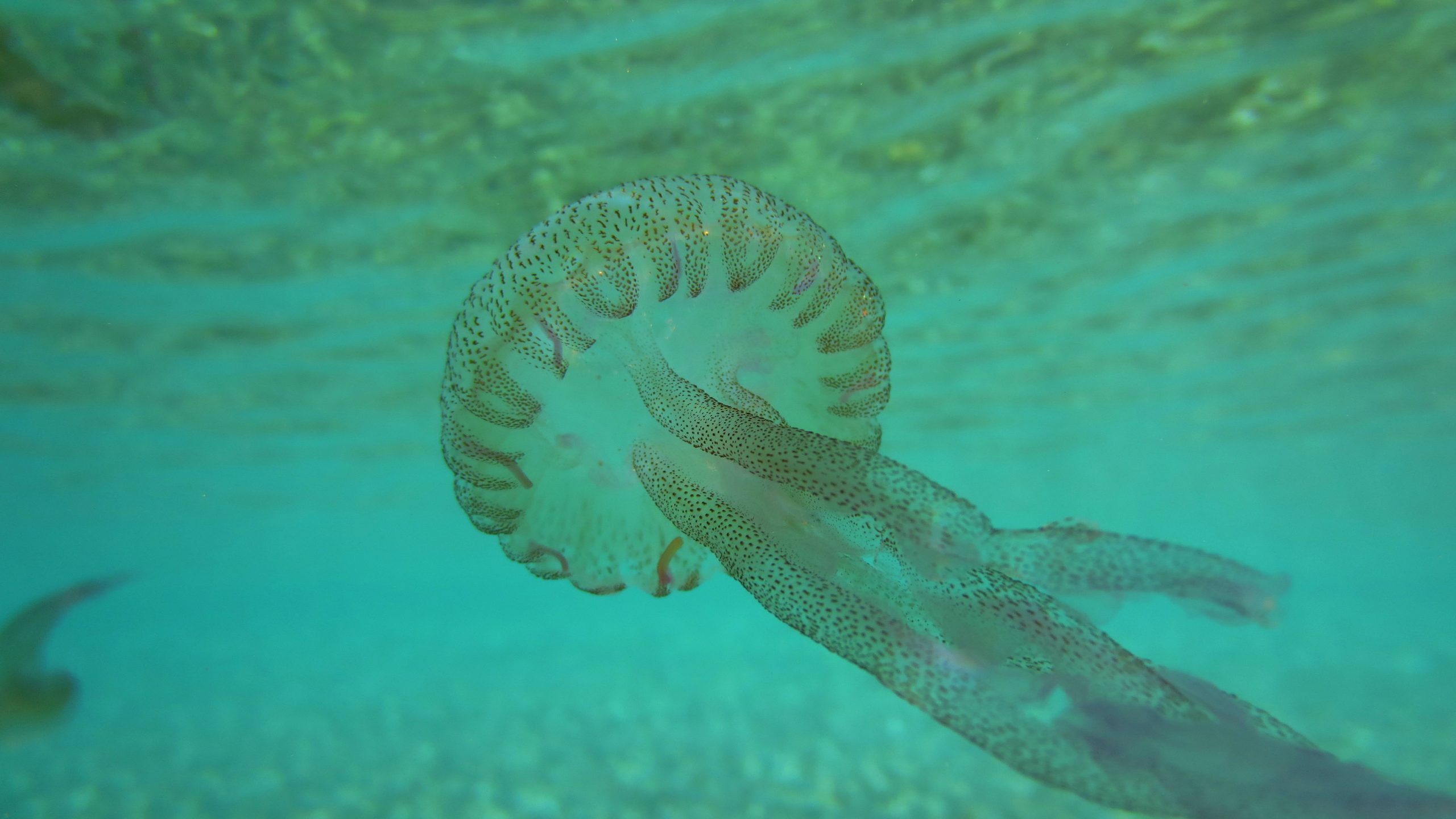
The ocean remains a place where eyes stays essential far beneath the reach of daylight. In the darkness, animals make their own light. The sea holds the great majority of glowing life on Earth and that glow serves many jobs at once, from hiding a body outline to pulling prey close. Deep-sea bioluminescence is one of the ocean’s most useful inventions. ocean life shows just how common it is in the water column. The source is simple enough. Within the body, a light-producing molecule combines with oxygen, frequently with the aid of an enzyme or trigger molecule, to produce a flash. Animals are able to adjust the brightness, timing and occasionally even color of that phenomenon. For creatures living where the sunlight fades, that control can mean food, safety and a better chance to reproduce.
The natural world continues to astound scientists. According to marine biologist Edith Widder, “how animals use it to survive” is the thing that most intrigues her. That idea sits at the heart of the deep sea. Glow is a tool, a signal, a shield and sometimes a trap.
1. A World Built for Blue Light
Underwater, light behaves differently. Red disappears quickly as you descend, followed by yellow and green, then blue goes the furthest. By the time you are deep underwater, the ocean is a place built by blue-green light. The reason why most marine bioluminescence lands in those colors. They are able to reach eyes designed to detect them and they carry well. That simple physics helps explain why glowing animals look the way they do. A flash that can travel through seawater is more likely to match the light going down from the surface, startle a predator, or reach a mate. A useful signal has to work in a blue environment in a vast area of the open ocean. Most deep-sea animals have also lost the ability to see red light, because it never reaches their place. The result is a highly developed visuals built around shorter wavelengths. Bodies, eyes and signals all line up with the same narrow band of light.
Yet evolution loves an exception. Some dragonfish produce red light and can see it, which gives them a unique light in the dark. To nearby prey, the water still looks black. To the dragonfish, dinner may be standing in a secret spotlight. A detailed explanation of this system appears on the UCSB dragonfish page, which also points to classic papers in Science and Nature.
So the deep ocean is built for blue, with a few notable exceptions. The usual glow follows the rules of seawater. Rare species get benefits by breaking these standards. In any case, for any species capable of creating or processing a pulse of light, the darkness holds great importance.
2. Hiding in Plain Sight
One of smartest uses of bioluminescence is camouflage. A predator may see shadows of many species in the upper part of deep water because it is visible with dim light from above. Some fish, squid and shrimp deal with that problem by producing light from their underside. This trick is called counterillumination.
Seen from beneath, a glowing underside can blur the animal’s shape into the background. Instead of a clear body outline, a hunter gets a patch of light that matches the dim surface glow. In the open ocean, where there are few places to hide, that small adjustment can make a huge difference.
Some species take the trick further. They can brighten or dim their glow to match changing conditions above them. If the water grows darker, their bodies shift with it. That level of control turns camouflage into a live performance, one tuned to the moment.
Camouflage in the deep sea often looks very different from camouflage on land. Transparent bodies help. Reflective sides help. A carefully placed glow helps too. The common theme is the same one the ocean teaches again and again, visibility can be dangerous and a body that blends into the water buys time.
3. Lures, Traps and Surprise Attacks
Glow can also act like bait. The most famous example is the deep-sea anglerfish, which carries a bright lure near its mouth and waits. In the dark, a tiny light can look like food, movement, or an opportunity. For any smaller animal drifting close, curiosity can end very badly.
That lure becomes even stranger when you learn that some anglerfish rely on bioluminescent bacteria living inside it. The bacteria gain a protected place to live. The fish gains a living lure. Few marine animals use bioluminescent bacteria this way, yet the relationship is now among the most well-known pictures from the deep sea. Elsewhere, animals use light to make prey easier to catch. Some species illuminate the water nearby. Others flash in a way that draws plankton toward the mouth. The goal is simple and remarkable, make a target come closer, then strike before it figures out what comes close . Cigar sharks add another twist. Their glowing underside can attract larger animals, which then come within range of a bite. The light helps create the right moment. After that, teeth do the rest. Then there are the dragonfishes again, whose built-in red light gives them a quiet hunting tool. Because most deep-sea animals cannot detect that wavelength, the hunter can search for prey without being noticed . It is one of the sharpest examples of bioluminescence shaping an entire style of predation.
Every one of these strategies grows from the same fact. In a place where sunlight never exists, an animal that controls light controls attention. It has the power to draw attention in, divert it, or direct it in the exact false direction for the person seeing.
4. The Burglar Alarm Effect
Sometimes a flash is a distress signal. A tiny creature reached or attacked, lights up suddenly and creates a burst that startles the predator. That brief confusion can open a path to escape. In the deep sea, even a second of uncertainty matters.
Biologists have a vivid name for one version of this strategy, the burglar alarm effect. The idea is that the first predator becomes visible to a larger predator. A glowing victim effectively calls for backup from something even more dangerous nearby. For tiny drifting life, that can be a smart move.
Dinoflagellates provide a classic example. These microscopic organisms light up when the water around them is disturbed. If a small grazer churns through a dense patch, the whole area can flash, making the grazer easier for fish to spot. What looks like a beautiful sparkle from the surface can be part of a high-stakes food web below.
Other animals go larger and more dramatic. Some worms release glowing packets. Some squid produce luminous clouds. These displays throw a predator’s focus into a bright moving target while the real animal slips away into the dark.
The alarm can keep working even after the attack. As to the Smithsonian, illuminating evidence might stay in a predator’s stomach, making it simpler for anything larger to locate that predator. Light, in this case, turns a meal into a beacon. Because of this, bioluminescence is on its verge of potential.
5. Signals for Mates
Deep-sea light also carries courtship. Animals need to find one another in darkness and a species-specific glow can work like an identity in motion. In a world with few landmarks and long distances between individuals, a flash may be the clearest invitation available for opportunity.
Some tiny crustaceans called ostracods use glowing displays to attract females. Fireworms provide another striking example. Around the right phase of the moon, females of some species move in circles and emit light, creating a signal that males can follow. These are mate signals built for black water.
For fish, bioluminescence may also help distinguish males from females or support communication during courtship. The details vary from species to species, which is part of what makes the subject so powerful. A flash can act like a pattern, a code, or a brief announcement that reaches exactly the right receiver.
One species’ ability to conceal itself can be aided by the same biological chemical that allows another to attract mate. Evolution continues to reuse useful tools. In the sea, light is one of the best tools.
Andrea Quattrini has described bioluminescence as “one of the earliest forms of communication in the oceans.” Courtship gives that idea a very immediate feel. A point of light in darkness can say where an animal is, what species it belongs to and whether the moment is right.
6. A Glow With Ancient Roots
The glow of the deep sea also reaches far back in time. A 2024 study highlighted work on soft corals called octocorals and suggested that bioluminescence in this group may date to about 540 million years ago. If that estimate holds, the trait is far older than scientists once thought.
Using fossil anchors and contemporary animals, the researchers constructed a phylogenetic tree. They concluded an investigation that living octocorals most likely had a glowing common ancestor. This would put the emergence of earliest marine animal ecosystems near the beginning of the first known marine bioluminescence.
That ancient timing matters because it suggests light became useful very early in ocean life. Quattrini said the work points to bioluminescence as “one of the earliest forms of communication on Earth.” In deep water, where sunlight fails, any signal that can travel through darkness has enormous value. There is still room for debate about the exact date and the number of times bioluminescence evolved in different lineages. Scientific American reported that outside experts would like caution around the idea of a single origin in octocorals. Strong results, unanswered questions and upcoming tests are typical of how science proceeds. Even with those open questions, the larger picture is clear. Bioluminescence has appeared many times across marine life and it keeps showing up because it works. It helps animals feed, hide, warn, attract and communicate. Few traits offer so many uses from the same chemical reaction. So when a coral flickers, a squid flashes, or a dragonfish sends its own light through the water, that light carries a very old story. The deep sea is dark. Life is answered both brilliance and uniqueness. Ancient glow, secret searchlights and survival by signal all grew from the same simple act, making your own light when the world gives you none.